gine a customer sending back an online order that didn’t fit or was defective. These returned items don’t simply disappear; they move through a complex process to recover value and minimize waste.
Reverse logistics is a critical part of supply chain management that involves the journey of goods traveling backward—from customers returning items to warehouses where they are inspected, repaired, recycled, or resold.
For third-party logistics (3PLs) providers, this process is becoming more essential as demand for returns handling rises. Yet, according to the 2023 Third-Party Logistics Study, while 80% of 3PLs expect demand for reverse logistics to grow over the next three years, 43% have no plans to offer these services.
Without the right systems in place, returns can quickly overwhelm warehouses, leading to delays, misplaced inventory, and increased disposal waste.
A warehouse management system (WMS) plays a crucial role in the reverse supply chain to help 3PLs inspect, categorize, label, and organize returned items with low costs and maximum return value.
This article details reverse logistics and how WMS software can help 3PLs build strong customer relationships through returns processing and management.
What is Reverse Logistics in the Context of 3PLs?
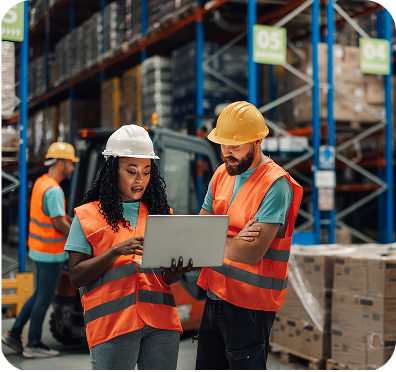
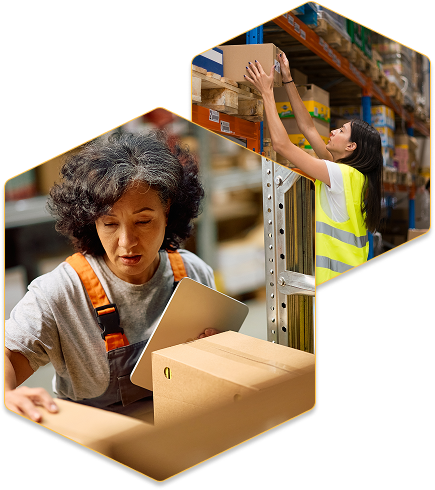
Reverse logistics (RL) is the management of returned goods through the supply chain. In a typical 3PL warehouse, this looks very different from regular forward fulfillment operations. Imagine walking into a warehouse and seeing a dedicated returns area with a receiving dock specifically for returns, where workers unbox incoming packages and scan them into the system, and an inspection station where staff carefully examine returned items under bright lights.
If traditional logistics is a system to deliver goods to customers, reverse logistics is an equally structured operation to handle returned or used items. That means items have to be:
- Unpacked and inspected
- Photographed for quality control
- Tested for functionality
- Cleaned and repackaged
- Relabeled with new SKUs for resale
- Either returned to prime inventory locations or moved to secondary market storage
Making this kind of operational complexity possible requires a lot of planning by 3PLs warehouses. When they take on RL, they must redesign warehouse layouts, set up inspection and sorting areas, and implement new workflows to track, refurbish, or dispose of items based on their condition.
The Six Rs of Reverse Logistics
Here are the six main characteristics of reverse logistics:
- Returns: 3PLs collect, inspect, relabel, and store returned goods, whether they’re defective, incorrectly shipped, or just unwanted by the customer.
- Recalls: They pull defective or damaged products from the market to protect the brand’s reputation.
- Repairs: 3PLs fix old or slightly damaged products instead of tossing them.
- Recycling: The providers properly recycle unsellable products while following environmental and regulatory standards.
- Repackaging: They refurbish and repackage items for resale in secondary markets to maximize value.
- Replacements: When necessary, 3PLs send out a new product to customers, ensuring smooth operations and maintaining customer satisfaction.
These steps help 3PLs reduce waste and recover value while supporting the circular economy, which focuses on reusing materials and lowering carbon footprints.
According to a Gartner study, 54% of consumers say they will only do business with companies that prioritize environmental and social sustainability.
Reverse logistics allows 3PLs to meet environmental compliance through recycling, help clients maintain brand reputation through timely recalls and faster return processes, and earn revenue through reselling in secondary markets.
While reverse logistics offers economic and environmental benefits, it also comes with complex challenges that 3PLs must overcome.
While reverse logistics offers economic and environmental benefits, many 3PLs refuse to provide reverse logistics because they need to dedicate a separate budget and labor costs that often don’t promise an equal return of value.
Challenges in Reverse Logistics for 3PLs
Here are some challenges 3PLs face in reverse logistics:
Lack of Visibility In Returns Inventory
3PLs often lack real-time visibility on their returns inventory. This leads to mismanagement or delays in disputes or refunds. Warehouses need advanced solutions to receive updated inventory status on returned orders.
High Labor and Operational Costs
Reverse logistics is expensive and complicated for 3PLs. Every return requires manual inspection, sorting, and decision-making to determine whether it should be refurbished, recycled, or discarded.
This takes a lot of labor and operational costs. To manage unpredictable returns, warehouses need AI-powered automation and predictive models that optimize storage and tracking.
According to Zebra Technologies, nearly 47% of warehouse operators consider returns management their biggest challenge. Many leave end-of-life (EoL) products sitting around because processing them costs more than they’re worth.
Reliance on Manual Processes
Many 3PLs rely on manual processes for managing returns and assigning workers to inspect and label items. The same Zebra research shows around 80% of warehouses still operate without automation, increasing error rates and slowing down return processing.
Fast Return Pressures
Warehouses often rush through return inspections to meet fast processing demands and keep consumers satisfied. Without a structured system, returned items are either discarded or placed in any available storage space, leading to disorganization and delays in resale or refurbishment.
Lack of Infrastructure
Many 3PLs lack dedicated return processing centers, automated sorting systems, or real-time tracking, making returns a slow and inefficient process.
Without the right infrastructure:
- Workers manually inspect and sort each returned item, often using spreadsheets or outdated systems.
- Packages pile up in warehouses, waiting for someone to process them.
- Customers experience long wait times for refunds or replacements.
With advanced infrastructure:
- Automated conveyors and barcode scanners instantly sort and categorize returns upon arrival.
- AI-driven systems flag defective items for repair, recycling, or restocking.
- Customers receive instant refund approvals and real-time updates on their return status.
Poor Supply Chain Coordination
3PLs lack supply chain coordination between manufacturers, retailers, recyclers, and logistics providers. Most supply chains are built for outbound logistics and often lack dedicated networks, storage spaces, and optimized transportation routes for reverse logistics.
How a Warehouse Management System (WMS) Software Solves 3PL Reverse Logistics Challenges
Here’s how a warehouse management system (WMS) overcomes these reverse logistics challenges:
Real-Time Inventory Tracking
Cloud-based WMS tracks real-time data on incoming return orders through barcode technology, RFID (Radio Frequency Identification) tags, IoT (Internet of Things) sensors, and cameras to update inventory status. This helps 3PLs track returned products, whether to assign to return inventory locations or move to secondary market storage.
Real-time inventory tracking on WMS helps 3PLs:
- Accelerate return processing to prevent markdowns.
- Improve stock visibility to balance supply and demand.
- Optimize refurbishment and resale decisions based on item condition.
- Reduce warehouse congestion by reporting aging inventory.
- Support sustainability by diverting returns from landfills.
Integrating Automation in Returns Management
WMS software helps you adopt the concept of Industry 4.0, which includes emerging technologies like internet connectivity, IoT sensors, and autonomous devices, in its ecosystem.
The software leverages algorithmic capabilities to analyze customer order return patterns and integrate new technologies to optimize the reverse logistics process.
Automated Return Processing
According to a study, WMS software processes 37% of returns within one day and 42% within one week, making it one of the fastest systems for reverse logistics. WMS can scan product barcodes, verify order details, and update inventory records in real-time, reducing manual effort and speeding up return handling.
For example, with Da Vinci WMS, you can easily manage return authorizations using Returns Processing (RMAs) with Small Parcel Returns Label Printing (printing labels for small packages).
How WMS helps 3PLs:
- It speeds up return handling, reducing labor costs.
- It minimizes human errors in sorting and categorization.
- It assigns returned items to the correct processing zones (refurbishing, recycling, or disposal)
Sustainability & Waste Reduction
WMS supports circular economy goals by categorizing returned items for resale, refurbishment, or recycling. The software uses data analytics to assess product conditions and suggest the best recovery option. This helps divert reusable materials from landfills. WMS can also help track waste disposal and follow industry-specific sustainability compliance.
How it helps 3PLs:
- It identifies the EoL cycle of goods, reducing unnecessary waste.
- It ensures regulatory compliance in waste management.
Integration with Logistics Partners
A WMS integrates with enterprise resource planning (ERP), customer relationship management (CRM), and transportation management system (TMS) platforms to sync return shipments, automate compliance tracking and coordinate with transport providers.
It enables auto-generated return labels, real-time shipment tracking, and automated restocking instructions. This allows smooth coordination between suppliers, warehouses, and distribution centers.
How it helps 3PLs:
- It ensures faster return shipments and resupply cycles
- It reduces transit time through optimized return routing.
- It improves your supply chain collaboration.
Space Optimization for Returned Goods
Warehouse congestion is a major issue in reverse logistics. Without structured storage allocation, unsorted returns take up valuable space, delay resale, and reintegrate returns more slowly.
A WMS automates slotting and storage allocation with advanced capabilities. It dynamically assigns space based on product condition, demand, and return volume. Real-time inventory tracking prevents clutter and prioritizes high-value returns.
By optimizing storage and retrieval, WMS helps 3PLs achieve faster returns reintegration while minimizing inventory space use.
Data-Driven Decision-Making
WMS leverages AI-powered predictive analytics to forecast demand and identify patterns like high return rates for specific SKUs (stock-keeping units). The system captures data on frequent returns to help you identify problematic SKUs.
How it helps 3PLs:
- It reduces markdown losses by reselling returns faster.
- It optimizes inventory planning based on return trends.
- It helps you manage multi-client return inventories.
Steps to Implement WMS for Reverse Logistics in 3PLs
Here’s how 3PLs can implement WMS for reverse logistics:
1. Assess Your Requirements
Start by identifying your main blockers in returns management. Some examples include poor visibility, wasted storage space, and inventory inaccuracies. You also need to review every client’s return policy, procedures, and deadlines to align your reverse logistics goals.
2. Select and Configure the WMS
Choose a WMS that aligns with your returns management needs. It should support real-time tracking, integration with existing systems, and return processing like sorting, repackaging, refurbishing, and disposals.
3. Implement IoT and RFID for Visibility
When integrating WMS, you need IoT devices and RFID tags to track and label returned orders for real-time visibility and inventory status. These technologies also help your employees and clients track the backward movement of returned items.
4. Optimize Reverse Logistics Workflows
Next, design a custom return processing workflow and use WMS to optimize your warehouse layout for inspection, repackaging, refurbishing, resale, or recycling. This will help reduce holding time and accurately allocate storage space for returned items.
5. Train Staff and Test the System
Conduct WMS training for warehouse operators, IT teams, and logistics staff. You can perform pilot tests on selected return categories, gather feedback from clients, and analyze return trends before full-scale implementation.
6. Monitor Performance and Optimize
Track key KPIs such as return processing time, inventory accuracy, and cost per return. WMS software can help you implement predictive analytics to forecast return rates and optimize returns management.
Future Trends in 3PL Reverse Logistics
Future Trends in 3PL Reverse Logistics
According to a Gartner study, only 27% of businesses currently use emerging technologies in reverse logistics. But as more companies adopt a net-zero policy, 3PLs will need end-to-end solutions like AI, WMS, or IIoT (Industrial Internet of Things) to manage return inventories sustainably.
Here are 5 future trends in 3PL reverse logistics to know:
- Industry 4.0 Technologies: Reverse logistics is evolving with Industry 4.0 technologies (IoT devices, cloud computing, and AI). For example, cloud-based IoT systems can manage waste disposal and recycling processes through real-time monitoring and access. In the future, warehouses will develop a highly integrated digital reverse logistics system to improve information sharing and resource utilization.
- Digital Twins Technology: The digital twin technology is a virtual replica of a physical object. In reverse logistics, the digital twin technology is being developed to simulate, monitor, and optimize return processes. Digital twins will use machine learning algorithms to help predict return rates, inventory needs, and processing issues.
- Smart Transportation and Green Logistics: Autonomous driving systems and dynamic route optimization will play a key role in sustainable warehouses. Self-driving trucks and data-driven fleet management will reduce fuel consumption and emissions.
- Blockchain technology: Blockchain technology will improve traceability and fraud prevention in returns management through proof records of transactions across a decentralized network.
- Predictive Models: AI, data analytics, and machine learning models will improve real-time decision-making for reverse logistics.
As businesses adopt circular economy practices, 3PLs will need to re-design warehouse layouts, adopt eco-friendly technologies, and develop strategies like sustainable packaging, safe disposal, and adherence to industry-specific compliance.
A WMS plays a crucial role in processing returns faster to increase customer satisfaction and revenue growth. Learn how you can reduce returns through accurate order picking, smart packaging, and quality control compliance with Da Vinci’s WMS. Book a call with us today.
FAQs About 3PL Reverse Logistics
What Is Reverse Logistics for 3PLs?
Reverse logistics is the process of handling goods that move back from the customer, including returns, exchanges, repairs, refurbishment, recycling, and disposal. For a 3PL, it means receiving, inspecting, and processing returns on behalf of clients.
What Are the Main Challenges in 3PL Reverse Logistics?
Common challenges include unpredictable return volumes, inspection and disposition decisions, inventory accuracy for returned items, slow processing, and client-specific return rules. The post covers these in detail.
How Does a WMS Help With Returns Processing?
A WMS records returns on arrival, guides inspection and disposition, updates inventory in real time, and applies each client’s return rules. That speeds up restocking or disposal and keeps counts accurate.
How Do I Implement a WMS for Reverse Logistics?
Map your current returns process, define dispositions and client rules, configure the WMS workflows, train the team, and test with real returns before go-live. The post lays out the steps in its implementation section.
Why Does Return Speed Matter?
Faster returns processing gets sellable items back into inventory sooner and gives customers quicker resolution. Slow returns tie up stock and can hurt your client’s customer experience.
What Are Future Trends in 3PL Reverse Logistics?
The post points to circular economy practices, which will push 3PLs to redesign warehouse layouts and processes for reuse, refurbishment, and recycling, and to process returns faster with better systems.
Handling more returns than you can keep up with? Contact us to talk through how Da Vinci can help.