
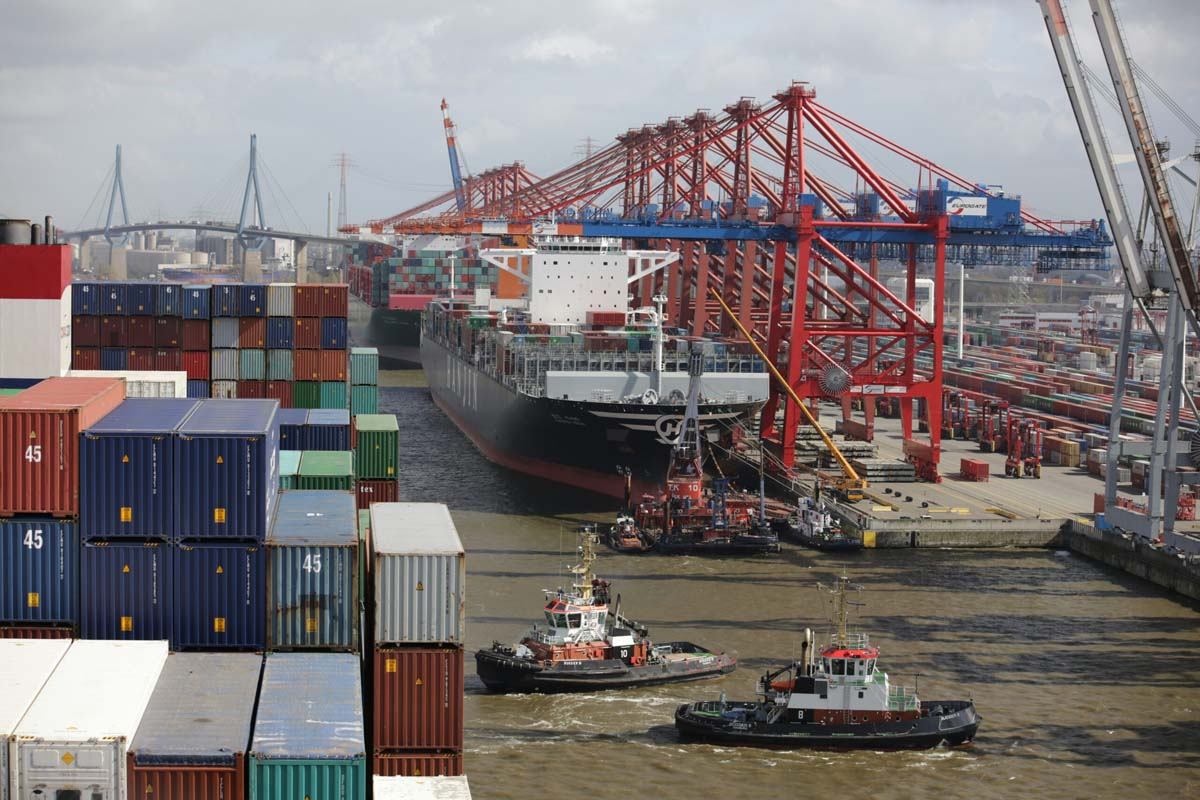
Recently, global events such as thePanama Canal drought, the Russia-Ukraine war, and a host of other factors have led to significant supply chain disruptions. In fact,55% of executives expect significant disruptions to their supply chains due to these factors and others.
Supply chain issues have caused major disruptions to e-commerce business owners, 3PLs, and even warehouse managers in recent years. Even with more resilient supply chain technologies and COVID behind us, these unique challenges continue to arise, and these professionals must tackle them to stay afloat.
But what are the most common supply chain issues? Let’s find out in this post while sharing practical solutions to overcome them.
What’s Causing These Supply Chain Problems?
Global supply chains are facing challenges from a combination of interconnected political, economic, or technology factors:
Geopolitical instability
Global conflicts are responsible for disrupting normal trade routes. For example, due to the Russia-Ukraine war, there are sanctions on oil, metals, and wheat, as well as restrictions on airspace and sea routes. China and Taiwan’s looming war also risks global semiconductor supply, and a reluctance to depend on China for manufacturing. These issues have led companies to take longer shipping routes, resulting in increased freight and insurance costs.
Disruptions in global trade routes
Global trade has faced significant disruptions due to challenges in two of the world’s most critical shipping lanes: the Panama Canal and the Suez Canal. The Panama Canal experienced a drought, with water levels dropping, resulting in a 40% reduction in ship capacity and delaying thousands of container ships from reaching their destinations.
On the other hand, the Suez Canal has been dealing with heavy congestion due to both increased traffic and geopolitical tensions in the surrounding region. Ongoing instability in the Red Sea and surrounding waters has made the route less reliable, causing some shipping lines to reroute vessels around the Cape of Good Hope, which increases shipping time and fuel costs.
E-commerce expansion
Online shopping is outpacing supply chain capacity. Customers expect same-day or next-day delivery, pressuring retailers and fulfillment centers to speed up processing, increase inventory turnover, and maintain order accuracy.
This urgency creates operational problems: inventory mismanagement, shipping errors, missed deliveries, and customer service issues. Companies are responding with warehouse management systems like Da Vinci, micro-fulfillment centers, supply chain forecasting, and 3PL partnerships. But a gap still exists between consumer demand and supply chain capability.
What Are the Most Common Supply Chain Issues Today?
Here are some of the most common issues currently plaguing the supply chain.
Global economic uncertainty
In 2025, global economic uncertainty has reached a new level, presenting a significant challenge to supply chains. This challenge stems from various factors, including fluctuating oil prices, inflation rates, and evolving trade policies. These factors significantly impact cost structures and operational activities, potentially causing issues in supply chain management.
Global political unrest
According to this survey, retailers believe that political issues are a leading cause of supply chain disruptions. 58% of business leaders believe that global conflict has a significant impact on the ability to procure and transport materials and products. The limitations on air freight transportation across Europe and Asia, where planes should pass through Russia. These disruptions, even to rail freight, affect how retailers can source and ship products to consumers.
Rising fuel costs
The Russia-Ukraine conflict has a profound impact on the global fuel and energy markets. Studies show that the global fuel price index is rising and remains higher than its base year of 2016. With soaring energy costs, retailers find it more expensive to store and deliver products in their inventory. Gas prices have been at a 15-year high since 2022, impacting profit margins and making it difficult to ship around the world.
Regulatory compliance changes
New regulatory laws disrupt supply chains, requiring quick adaptations. (ESG) compliance laws now mandate companies reduce carbon footprints and ensure fair labor practices.
Government enforcement spans the entire supply chain, forcing companies to process massive amounts of data with shrinking workforces.
Changing consumer demands
Consumers now demand fast delivery, customization, transparency, and sustainability. Meeting these expectations requires real-time tracking technology and data analytics to forecast behavior. Many companies lack the budget or resources to implement these tools, hurting a 3PL company‘s responsiveness and, by extension, customer satisfaction.
Logistics constraints
E-commerce growth has strained transport systems, increasing delays and shipping costs. Climate disruptions like Panama Canal droughts (40% usage reduction in 2024) force companies to use costlier rail and air alternatives.
Labor shortages
Warehouse and trucking labor shortages coincide with record job turnover and e-commerce growth. While automation helps increase productivity, skilled workers remain essential for accuracy and oversight. Even minor errors like incorrect delivery details create significant problems.
Supply chain cybersecurity threats
The supply chain is undergoing fast digitalisation to improve speed and flexibility. However, the APQC study found that 52% of respondents struggled to adopt and implement new technology. Rapid digitalization improves speed and flexibility but creates vulnerability. The APQC study found that 52% of respondents struggled to adopt and implement new technology properly. Rushed digital adoption exposes supply chains to cyberattacks and data breaches.
Clearing warehouses
Cluttered warehouses cause inventory errors and delayed fulfillment. Warehouse management systems like Da Vinci provide layout optimization and route planning to eliminate these issues..
Raw Material Scarcity
Shortages of glass, lumber, and metals delay manufacturing. According to the 2023 Hubs Supply Chain Resilience report, 61% of supply chain professionals cite material shortages as their top supply chain challenge. These shortages increase costs and reduce profits.
How Do Supply Chain Issues Impact Warehouses and 3PLs?
Supply chain problems have a direct negative impact on warehouses and 3PLs. Here’s how:
Inventory imbalances
Where there are material shortages, it can be difficult to make products available. Delays from manufacturers can leave warehouses with insufficient inventory, which can lead to stockouts and can directly impact customers’ trust in the 3PL. In anticipation of potential delays, 3PL warehouse managers may over-order, which can lead to congestion in warehouses, making it more challenging to navigate the facility.
Transportation costs and delays
With rising fuel prices and trucking shortages, it may be challenging for 3PLs to deliver goods to customers, which negatively impacts order fulfillment. This might result in higher logistics costs and late deliveries to customers. On the other hand, port congestion may delay inbound shipments, which can slow down order fulfillment time.
Warehouse capacity strain
When goods finally arrive after long delays, there might be an overstocking problem leading to warehouse congestion, and there is typically not enough time to make space to accommodate the inventory. This leads to slower operations and an increase in mistakes in picking and packaging.
Unsatisfied customers
Delays and errors in vital delivery information can significantly impact customers, especially given the increased demand for fast and accurate deliveries. Customer trust decreases drastically due to these issues in the supply chain, and 3PLs can lose contracts when they fail to deliver as promised.
Increased labor costs
Due to a labour shortage, it is becoming increasingly difficult for 3PLs to find warehouse workers and truck drivers. To continue operations, companies must either hire temporary workers or pay more to retain their staff, which significantly impacts operational costs and can lead to higher prices for customers.
How to Overcome Supply Chain Challenges
Here are some practical tips on overcoming supply chain challenges.
Create flexible contracts with suppliers.
With economic instability and unpredictable fuel costs, flexible contracts with suppliers can help manage price swings. This solution will also suffice in cases where there is a shortage of materials from your regular supplier. Invest in data analytics to gain insight into patterns and prepare adequately for incoming periods of inflated prices. Collaborate with your suppliers and suggest material substitutes where possible.
Use compliance software
With the rise of ESG compliance laws, compliance software and professional legal advice from supply chain consultants are crucial for helping your warehouse implement these regulatory requirements. Conduct regular audits to ensure end-to-end compliance. Train your staff on new compliance standards and procedures to ensure that every process in the supply chain is compliant.
Invest in automation
Where there is a labour shortage, consider investing in automation for repetitive tasks to reduce your reliance on the human workforce. Consider enhancing workers’ benefits and implementing training programs to reduce the turnover rate and retain employees. Partner with recruitment agencies who can help you find skilled workers at short notice as well.
Use a WMS
With a WMS, you can optimise your warehouse layout, which helps warehouse managers and 3PL providers maintain order in the warehouse. An organised warehouse improves the picking and packaging process, thereby improving order fulfilment times. This software can also analyze your inventory to organize it according to demand frequency and optimize the route, making the process faster and more efficient.
Advanced analytics
Advanced analytics play a significant role in observing and anticipating consumer behaviours. This enables logistics leaders to manage inventory more effectively by reducing orders for goods that do not sell as well and increasing stock for fast-moving items. Integrating responsive logistics helps satisfy consumer demands and adapt warehouses and 3PLs to future innovations and expectations.
The Future of Supply Chain Challenges (and What to Prepare For)
Based on past and current occurrences, it’s not hard to decipher what the future holds for supply chain challenges. Let’s explore a few trends to expect.
Climate change’s influence on transportation
Climate change is sure to continue, and as such, 3PLs can expect more waterway restrictions due to drought or flooding. Weather-related delays, such as hurricanes and wildfires, can necessitate rerouting. However, 3PLs can adopt more climate-resilient structures, like rail, to still provide an option for transportation when weather conditions are unbearable. Monitor real-time weather data and integrate it into your WMS and transport management system (TMS) for route optimisation.
Technology takeover
Technology is constantly evolving, and as e-commerce continues to seek out more seamless operators, there will be an explosion of AI and robotics in the logistics sector. 3PLs can prepare ahead by adopting modular technology upgrades, such as WMS and ERP systems, to automate logistics operations. Logistics leaders should train employees on digital skills to enable them to operate them seamlessly.
Material scarcity
Currently, there are existing shortages in lithium, semiconductors, and rare earth metals, all of which are essential for producing electronic devices. This will lead to an increase in demand for them and a corresponding rise in price. 3PLs can prepare ahead by building more diverse supplier networks and planning to adopt recycling models.
Consumer expectations will increase.
There is a constant increase in fast, sustainable, and personalised delivery. There is also a need for transparent supply chains. With consumer-centric tech like real-time order tracking, logistics managers can offer consumers much-needed transparency. They can also enhance data visibility by utilising a WMS like Da Vinci, which provides insights into customer demands through forecasting.
Warehouse challenges will evolve.
There will be a need for highly optimised warehouse spaces to accommodate more inventory. There will also be demand for smaller distribution centres to ensure fast deliveries. With AI-optimised warehouse tools like Da Vinci WMS, warehouse managers can ensure that they create an optimised space with the right layout to accommodate more inventory volume.
FAQs About Supply Chain Issues
What Are the Most Common Supply Chain Issues Today?
The most common issues include global economic uncertainty, political unrest, rising fuel costs, regulatory compliance changes, shifting consumer demands, logistics constraints, labor shortages, cybersecurity threats, and raw material scarcity. Most operators feel several of these at once, not one at a time.
What Causes Supply Chain Disruptions?
Common drivers include geopolitical instability, disruptions in global trade routes, and the expansion of e-commerce, which raises order volumes and delivery expectations. These pressures compound each other, so a single event can ripple through transportation, inventory, and labor.
How Do Supply Chain Issues Affect Warehouses and 3PLs?
Warehouses and 3PLs feel it through inventory imbalances, higher transportation costs and delays, strained warehouse capacity, unsatisfied customers, and rising labor costs. A 3PL carries these risks for every client at once, so a problem upstream can hit several accounts in the same week.
How Can a 3PL Overcome Supply Chain Challenges?
Practical steps include negotiating flexible supplier contracts, using compliance software, investing in automation, using a WMS, and applying advanced analytics. No single fix covers everything, so start with the constraint that costs you the most service or margin today.
How Does a WMS Help With Supply Chain Issues?
A WMS gives warehouse teams a system of record for inventory, locations, and orders. An organized warehouse improves picking and packing, and better visibility makes it easier to spot imbalances and capacity strain before they turn into late shipments.
What Supply Chain Challenges Should Warehouses Prepare for Next?
Plan for climate-related disruption to transportation, faster adoption of technology, continued material scarcity, rising consumer expectations for fast and transparent delivery, and warehouse space that has to work harder. Building flexibility into contracts, systems, and capacity now is cheaper than reacting later.
Solving Supply Chain Issues Starts Inside the Warehouse
Supply chain issues often originate within the warehouse, with congestion and overstocking being among the primary causes; however, external factors can quickly exacerbate them. Each factor that influences supply chain disruptions is interconnected with the others, and their solutions hinge on one factor: Internal automation.
One of the best ways to automate a warehouse to eliminate supply chain disruption is by integrating the Da Vinci WMS. This cloud-warehouse management solution offers analysis and warehouse optimization tools that help enhance warehouse layout and improve order fulfillment. With analytics and demand forecasting, warehouse managers can easily plan for specific inventory volume and curb congestion. Da Vinci offers so much more in the combat against supply chain challenges.
Book a demo today and integrate the world’s greatest solution to supply chain management.
Facing supply chain pressure in your own warehouse? Contact us to talk through your options.